Ecosystem Partners
Arts and Culture
Business Strategy
Article
Insights & Innovation
db67ba2d-93ca-4b92-bea0-ef1781063204
5 min
https://edge.sitecorecloud.io/tessituraneab9a-tessiturane5642-staging-5396/media/Images/Discover-Images/Insights-and-Inspiration/iMedia-partner-story-AEO-768x465px.png?h=465&iar=0&w=768
iMedia explores the connection between audience insights and answer engine optimization
How arts and culture organizations can thrive in the age of AI discovery
5 min
User journeys are changing.
For decades, audiences looking for performances, exhibitions and cultural experiences began their search with a simple query. "Concerts near me" or "best museum for families" returned pages of results for users to sift through, compare and explore.

Users are still searching for answers. Where they go to ask those questions, though, is shifting.
Today, the answer often comes before the click. 50% of users rely on AI-powered platforms like Google AI Overview or ChatGPT to summarize recommendations, reducing the need to scroll through websites and search results.
For marketers, this new front door to the Internet has major implications. If your organization doesn’t appear in AI-generated responses, you're missing a critical opportunity for discovery. That's why answer engine optimization (AEO) is becoming an essential part of digital strategy.
The organizations most likely to succeed in answer engines won't necessarily be the ones producing the most content. They'll be the ones that best understand the people they serve and the questions they're asking.
Arts and culture institutions are uniquely positioned to succeed in this landscape. Every ticket purchase, membership renewal, donation and customer interaction provides clues about what people care about, what questions they're asking and what experiences they're seeking.
The team at iMedia has spent the last several years navigating this evolution in search behavior. Here's what they're learning in the sector and what it means for audience acquisition.
Why visibility matters more than clicks
The shift from search engine to answer engine requires organizations to rethink what success looks like. In the era of AI-powered discovery, being included in the answer can be just as important as earning a website visit.
“We don’t always see the visibility in AI because most of these searches don’t end in a click,” explained Anthony Zarro, Vice President of Client Strategy at iMedia.
If your organization has noticed a decline in organic search traffic, the growing adoption of answer engines may be the reason. Audiences increasingly conduct research, compare options and make decisions without ever clicking through to a website.
When answer engines summarize options and make recommendations, visibility becomes a competitive advantage. Simply put, the answers AI surfaces shape purchase decisions.
For that reason, Anthony suggests that being the answer matters more than appearing as the top link. This is because AI is driving “more educated, more qualified and more action-oriented traffic.” A study conducted by Semrush shows visitors who arrive at a website via an answer engine are 4.4x more valuable than visitors who arrive via organic search, based on conversion rates.

In other words, discovery is no longer defined by the click. Keywords still matter, but marketers now need to anticipate the questions audiences will ask AI. The organizations most likely to be named in the answer are those that understand what their patrons are asking, and why.
How audience insights shape your AEO strategy
As user journeys change, teams should view AEO as an audience strategy. Understanding what motivates your visitors, what information they're seeking and how they make decisions is the foundation of effective discoverability.
That’s where audience insights become valuable. Consider the data captured in a system like Tessitura. Customer service inquiries, attendance patterns and engagement history reveal what influences audience behavior. You can use customer surveys on the purchase path or event preferences to chart a path to what the broader public seeks.
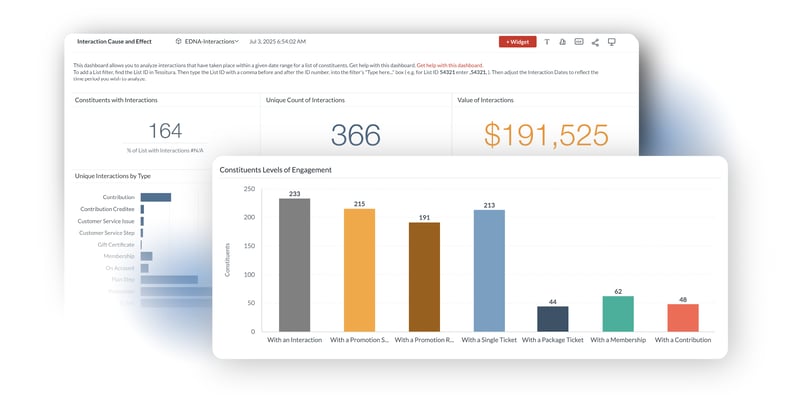
Your existing data for audience engagement, purchase patterns and interaction type can be applied to AEO strategy.
This unified view of engagement gives arts and culture organizations a head start on AEO. Instead of guessing what people might ask answer engines, you can use real data to identify the questions, interests and motivations that drive discovery. The next step is turning those insights into action.
“You have probably optimized a webpage for a keyword. That’s still important, but now we have to do more,” Anthony explained. “We have to start optimizing for questions that customers actually ask.”
What steps you can take today
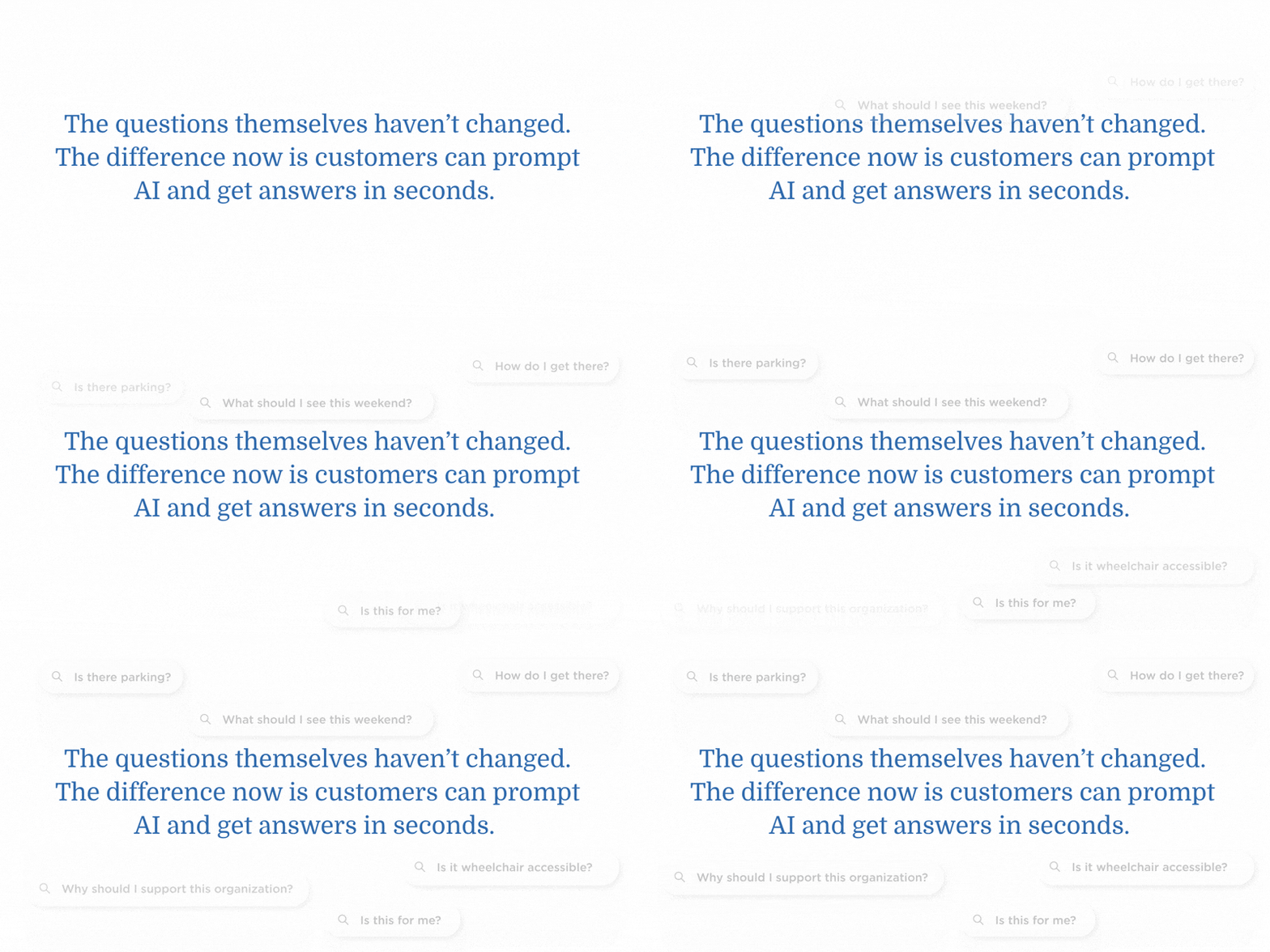
Think about what customers typically ask themselves before making a purchase: “What should I see this weekend?” “Is this for me?” “How do I get there?” “Is there parking?” “Is it wheelchair accessible?” “Why should I support this organization?”
The questions themselves haven’t changed. The difference now is customers can prompt AI and get answers in seconds. Improving your organization’s visibility does not require a total content strategy overhaul. It’s a matter of making strategic adjustments to the resources and data at your disposal.
To start, iMedia encourages marketing teams to use their existing audience intelligence. Gather the top questions your box office and visitor services teams receive. Review survey responses, search queries, event feedback and customer service inquiries. Then enter those questions into an answer engine. Are you in the answers? Is the information accurate? If the answer is “No,” you have identified a gap in your discoverability.
That gap is an opportunity to update your website with content that is easy for both answer engines and visitors to understand. Something as simple as adding an FAQ section on an event or exhibition page may surface your organization in AI answers.
The bottom line for AEO: Humans and machines should be able to easily find answers to their questions on your website. Once you’ve incorporated that information, keep an eye on the traffic, new sales and how people are purchasing. That’s how you begin applying your wealth of audience data to a sustainable strategy.
Where discovery is headed next
While the shift from search engines to answer engines is still in its early stages, arts and culture organizations do not need to navigate it alone.
What iMedia is hearing more than ever is, “What should we do that will last not only in the next 12 months, but in the next 5 years?" Anthony’s advice? Start now, stay consistent and be flexible.
“This is not the kind of activity that you could turn on for a few minutes and then turn off and forget about it. You have to really bring it into the fabric of your task list and your project management.”
— Anthony Zarro, iMedia Vice President of Client Strategy
“This is not the kind of activity that you could turn on for a few minutes and then turn off and forget about it,” he shares. “You have to really bring it into the fabric of your task list and your project management.”
In other words, the future of discoverability isn't about a single optimization. It's about building an ongoing practice of listening, learning and responding to audience needs.
The teams best positioned for what's next will be those that can transform audience intelligence into meaningful, answer-driven content.
Combined with guidance from strategic partners like iMedia, arts and culture organizations can make more informed decisions about how they reach, engage and grow their audiences in an increasingly AI-powered landscape.
Want to learn how your organization can prepare for the future of discovery? Watch iMedia’s webinar on delivering digital-first experiences.
Topics
Ecosystem Partners
/Arts & Culture
/Business Strategy

 Insights and Innovation
An antidote to cynicism
Arts & Culture
Chuck Reif reflects on a career in the arts
 Insights and Innovation
I shouldn't be here
Innovator Series / Arts & Culture / DEAI
A journey of belonging and breaking barriers
 Insights and Innovation
Through the darkness
Arts & Culture / Business Strategy
Andrew Recinos shares the importance of community and togetherness